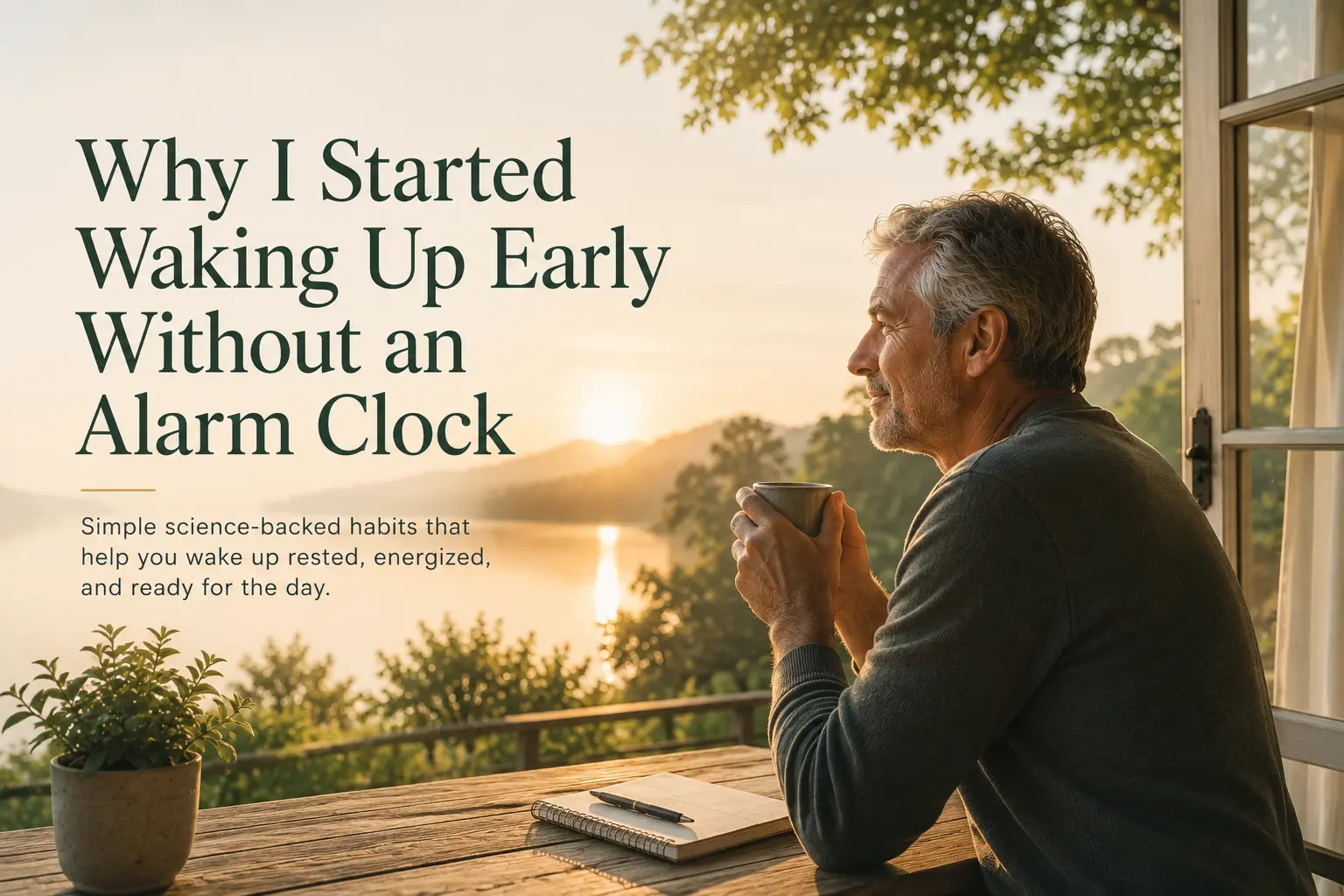
Why I Started Waking Up Early Without an Alarm Clock
There was a time when I admired people who woke up at 4 or 5 in the morning.
They exercised.
They read books.
They got things done while the rest of the world was still asleep.
I tried it too.
I set my alarm for 4:30 a.m.
Then I hit snooze.
And then snooze again.
By the time I finally got out of bed, I often felt more tired than before.
For a long time, I thought the problem was a lack of discipline.
But the more I learned, the more I realized that it wasn’t really about willpower.
It was about biology.
✦
Years ago, I saw sleep as the end of the day.
You work.
You get tired.
You go to bed.
Simple.
But age — and a few health challenges along the way — taught me something different.
Sleep is not the end of today.
It is the beginning of tomorrow.
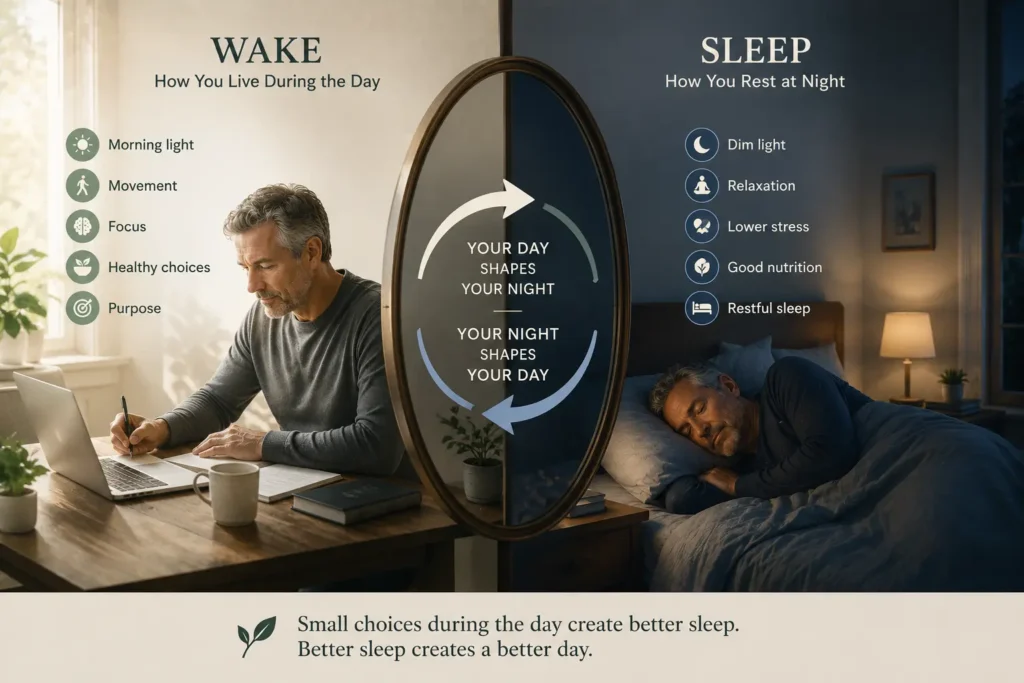
Two Sides of the Same Mirror
Professor Andrew Huberman often describes a simple but powerful idea:
Sleep and wakefulness are reflections of each other.
A good day helps create a good night.
A good night helps create a good day.
It sounds obvious.
Yet most of us forget it.
When we want better sleep, we often focus on what happens right before bedtime.
We look for supplements.
We buy a new mattress.
We search for the perfect evening routine.
But many of the things that shape our sleep begin much earlier — often within the first hour after we wake up.
The First Thing I Changed Wasn’t My Bedtime
If there is one habit worth trying, it is not necessarily going to bed earlier.
It is stepping outside in the morning light.
I know that sounds almost too simple.
But the science behind it is fascinating.
Inside our brain is a biological clock.
Its job is to answer one basic question:
Is it day or night?
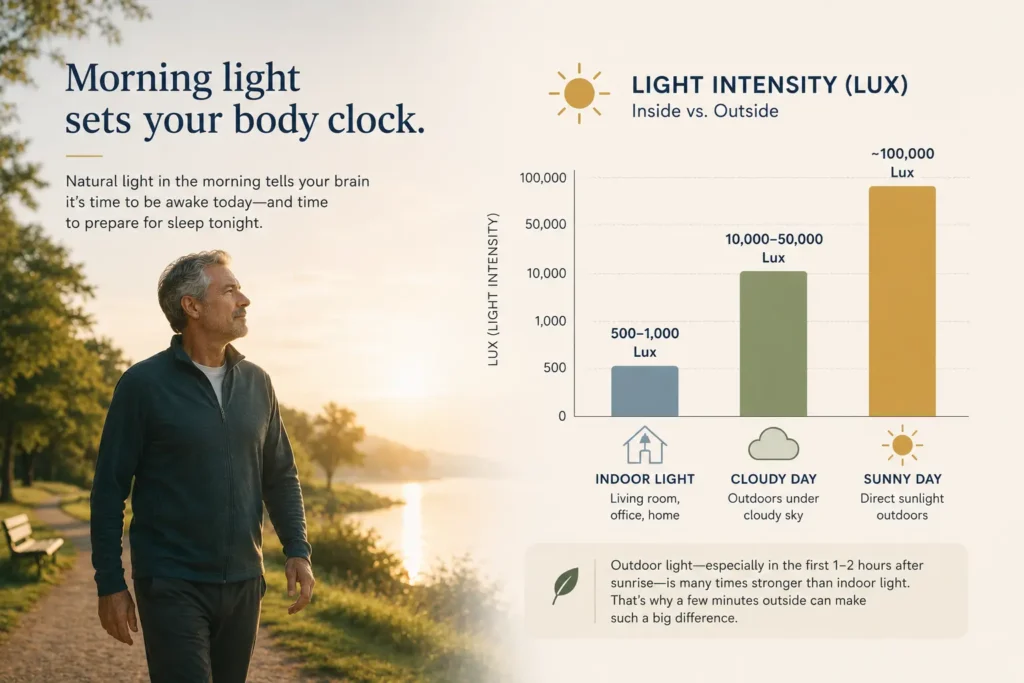
When morning sunlight reaches our eyes, that clock receives a clear signal that a new day has begun.
From that moment, a series of processes begin.
Alertness increases.
Body temperature rises.
And perhaps most importantly, the body starts preparing for sleep later that evening.
In other words:
Morning light doesn’t just help you wake up.
It also helps you fall asleep.
✦
What surprised me most was learning that indoor light is not the same.
Even sitting beside a window is often not enough.
Even on a cloudy day, outdoor light is dramatically stronger than the light inside our homes.
So sometimes the solution is remarkably simple.
Step outside.
Take a short walk.
Look at the sky.
Notice the trees.
Let the morning arrive before checking your phone.
The Body Loves Movement More Than We Think
The second habit is one we have heard about all our lives.
Exercise.
But not for weight loss.
Not for six-pack abs.
And not to impress anyone.
Simply to sleep better.
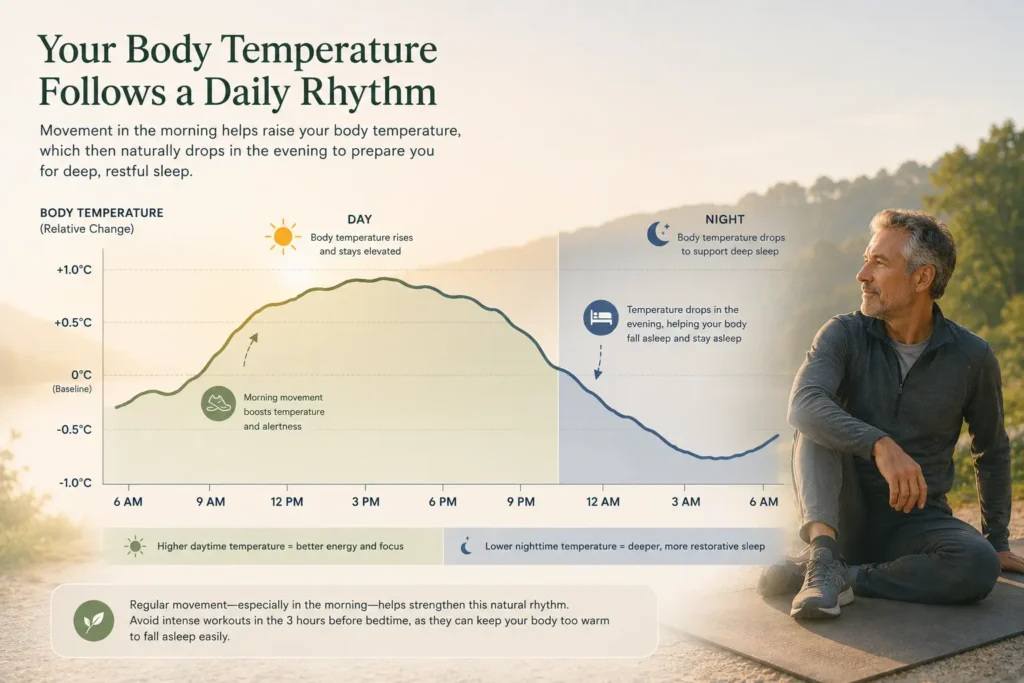
When we move, our body temperature rises.
Several hours later, it begins to fall.
That gradual drop in temperature is one of the signals that helps the body prepare for deep sleep.
Perhaps that is why my best nights of sleep often follow days when I have walked more.
No expensive gadgets.
No complicated tracking apps.
No special techniques.
Just movement.
✦
Morning is often the ideal time.
A walk around the neighborhood.
A bike ride.
A few minutes of stretching.
The goal is not intensity.
The goal is consistency.
What I Have Learned After Fifty
One thing changes as we get older.
The body becomes less interested in extremes.
It prefers rhythm.
A single late night may take days to recover from.
A week of irregular sleep can leave us feeling off balance for much longer than it once did.
But the opposite is also true.
Small habits become surprisingly powerful.
A little morning sunlight.
A little movement.
A reasonably consistent bedtime.
Repeated day after day.
That is often how lasting change happens.
Quietly.
Gradually.
Almost unnoticed at first.
Mistakes I Have Made Along the Way
The first was reaching for my phone the moment I opened my eyes.
I always told myself it would only take a minute.
But a minute often became thirty.
My brain was flooded with news, messages, and distractions before it had even fully woken up.
What it really needed was sunlight.
The second mistake was spending too much time indoors.
Many people live this way now.
We work inside.
We eat inside.
We relax inside.
Then we wonder why our energy feels low.
Our bodies were designed to experience daylight, fresh air, and movement.
Without them, something important goes missing.
The final mistake was impatience.
We live in a culture that expects instant results.
But the human body rarely works that way.
It needs time.
It adapts gradually.
And the most meaningful changes often arrive more slowly than we would like.
A Final Thought
I do not believe everyone needs to wake up at 4 a.m.
And I certainly do not think early rising is a measure of success.
What matters more is waking up feeling rested.
Having enough energy for the things that matter.
Having a clear mind to enjoy the day ahead.
If you would like to start somewhere, begin with two simple habits.
Step outside into the morning light.
Move your body every day.
You do not need to be perfect.
You do not need extraordinary discipline.
You only need to begin.
Then let your body do the rest.
✦
Sometimes the biggest changes in life begin with something as simple as opening the door and stepping into the morning sun.