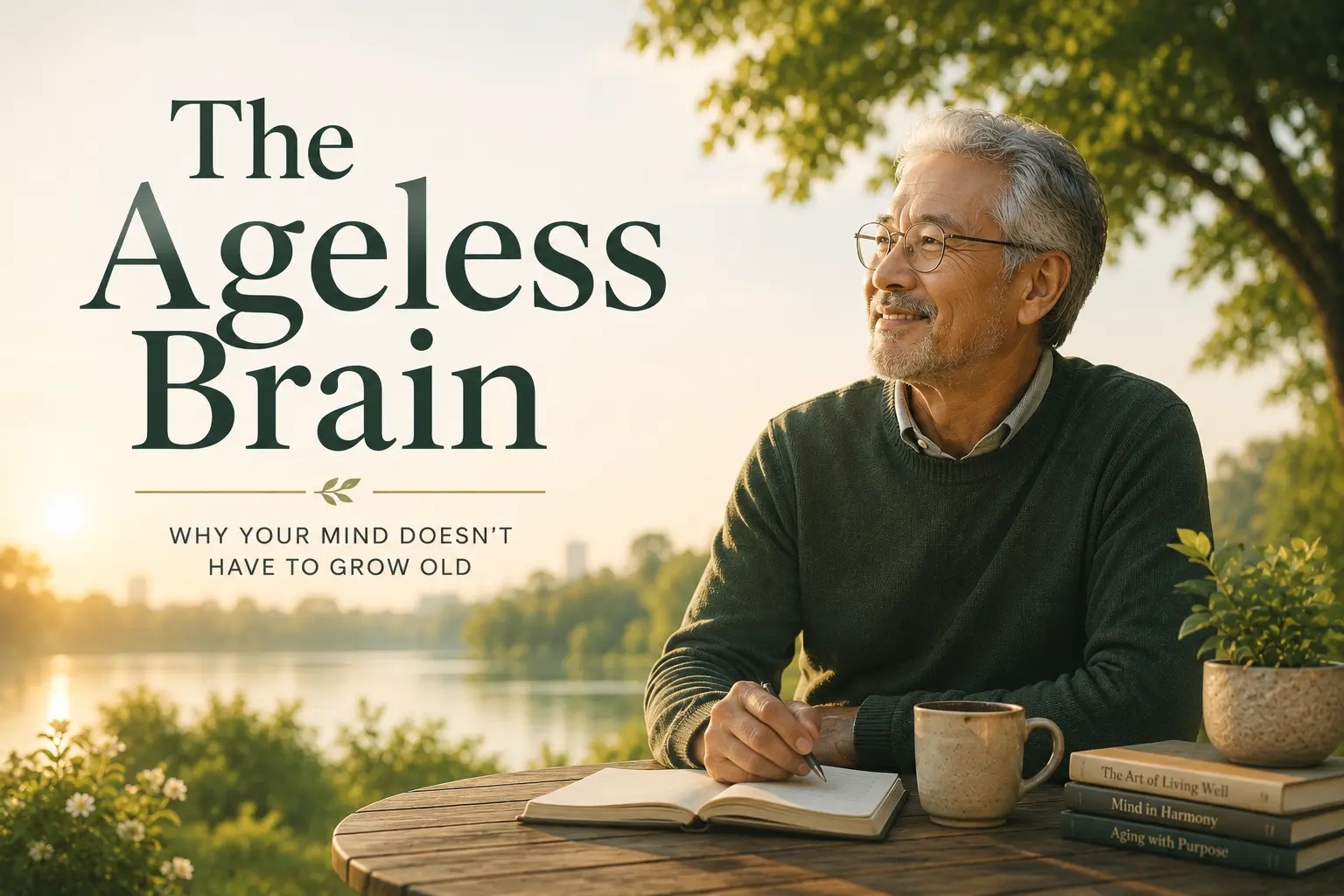
The Ageless Brain
What If Growing Older Doesn’t Mean Growing Mentally Old?
Have you ever met someone in their eighties who still seems genuinely alive?
Not just alive in the physical sense.
Alive in their curiosity.
Alive in their conversations.
Alive in the way they smile, laugh, and remain interested in the world around them.
And then, perhaps, you’ve met someone twenty years younger who already seems tired, forgetful, and disconnected.
For a long time, most of us have accepted a simple belief:
The body grows older.
The brain grows older.
And there is nothing we can do about it.
But modern neuroscience tells a more hopeful story.
According to Japanese brain researcher Nishi Takayuki, the brain may age very differently from the rest of the body. While certain functions naturally slow down over time, many others continue to grow, develop, and even improve.
The idea of an “ageless brain” may sound surprising.
Yet science suggests it may be more achievable than most of us think.
Let’s take a closer look.
A Surprising Discovery: Some Parts of the Brain Improve With Age
Many people worry when they hear that the brain gradually shrinks with age.
That part is true.
However, it is only part of the story.
The aging brain also develops strengths that younger people simply haven’t had enough time to build.
The Power of Language
Research suggests that our ability to process information quickly tends to peak relatively early in life.
But vocabulary, communication skills, and accumulated wisdom continue to grow for decades.
Scientists sometimes call this crystallized intelligence.
It is the ability to draw from a lifetime of experience, knowledge, and understanding.
That is why many older adults become better storytellers, better listeners, and often better decision-makers.
Understanding People
Another remarkable strength is emotional intelligence.
The ability to understand what others are feeling often improves through life experience.
Some studies suggest this ability reaches its highest levels during middle age and can remain strong well into later life when actively maintained.
Perhaps that is why certain older people have a calming presence.
People enjoy being around them.
Children trust them.
Friends seek their advice.
Their wisdom does not come from books.
It comes from living.
The One-Leg Test: How Old Is Your Brain?
Before discussing how to keep the brain young, let’s try a simple experiment.
It requires no equipment.
No special training.
Just a few seconds of your time.
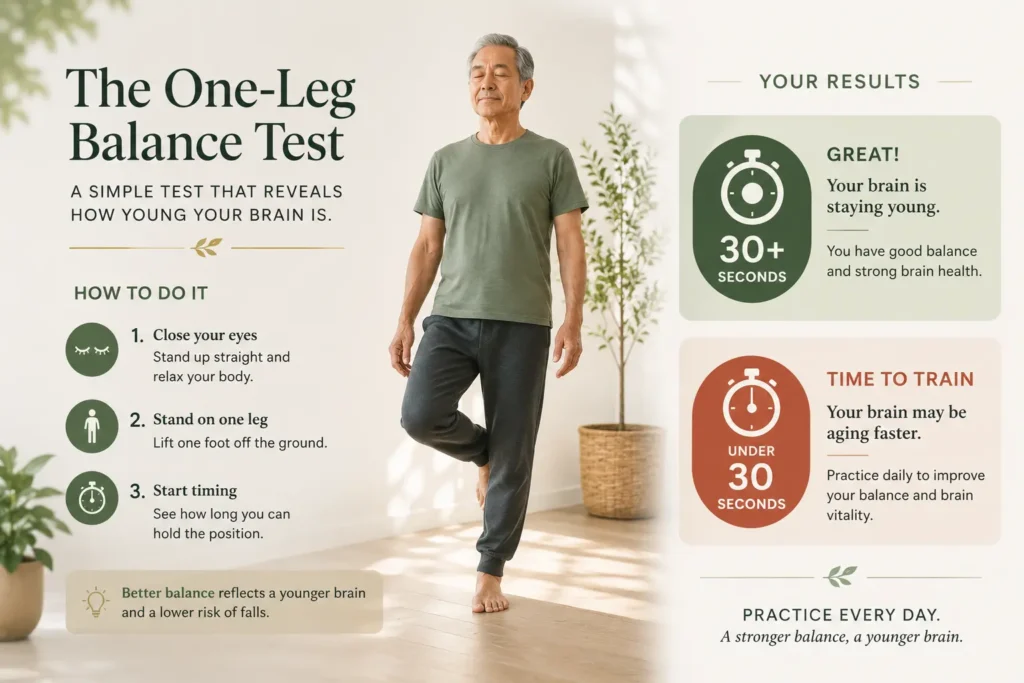
How To Do It
- Stand up safely.
- Close your eyes.
- Lift one foot off the ground.
- See how long you can maintain your balance.
What Your Result May Mean
More than 30 seconds
Your balance system appears strong.
This is often associated with healthier brain function and better neurological coordination.
Less than 30 seconds
Don’t worry.
It may simply mean your balance system needs more training.
The encouraging news is that balance can improve at almost any age.
Researchers have found that balance exercises not only reduce the risk of falls but may also help maintain brain health and independence later in life.
Think of it as a daily conversation between your body and your brain.
The stronger that conversation becomes, the better both tend to function.
The Most Powerful Anti-Aging Tool Isn’t a Supplement
Many people search for the perfect vitamin.
The perfect medication.
The perfect brain-boosting food.
But one of the strongest influences on brain aging may be something much simpler.
The way we think about ourselves.
Your Subjective Age Matters
Several fascinating studies suggest that the age we feel inside may influence how we function physically and mentally.
One famous Harvard experiment placed older adults in an environment designed to resemble their younger years.
They were encouraged to think, speak, and behave as if they were younger versions of themselves.
Within days, researchers observed measurable improvements in physical and cognitive performance.
Whether every detail of those findings holds up under modern scrutiny is less important than the larger lesson:
Our expectations influence our behavior.
And behavior influences the brain.
Someone who constantly says,
“I’m too old for that.”
often stops trying new things.
Someone who says,
“Why not give it a try?”
continues to learn.
And learning keeps the brain engaged.
The Power of One Small Word
There is another simple habit that may help.
The word:
But.
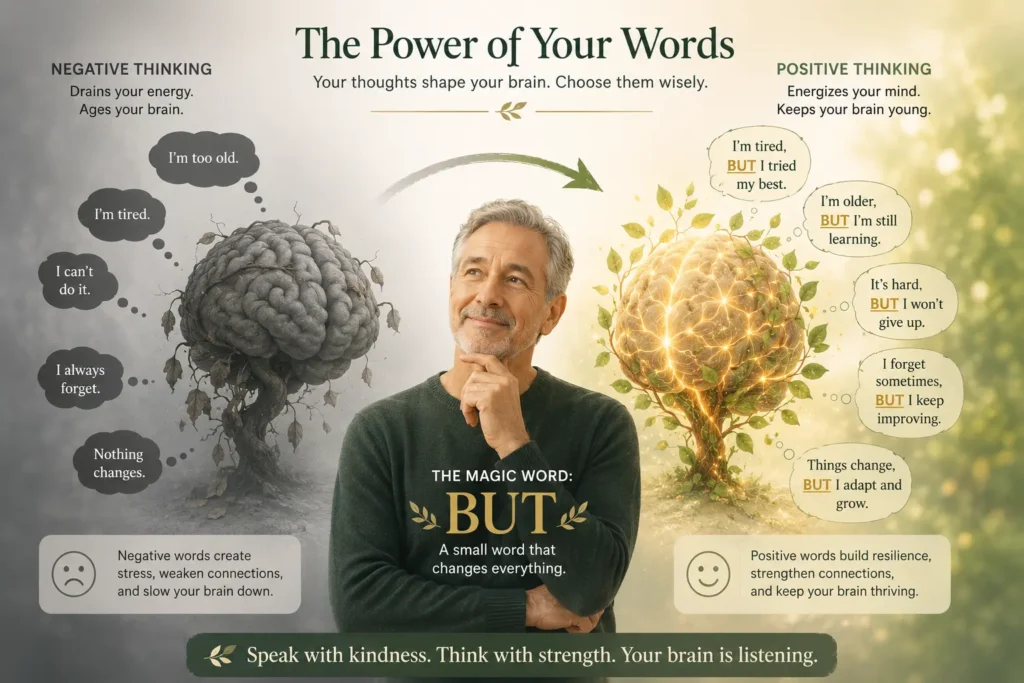
Instead of saying:
“I’m tired.”
Try saying:
“I’m tired, but I did my best today.”
Instead of:
“My memory isn’t what it used to be.”
Try:
“My memory isn’t what it used to be, but I’m still learning new things.”
That small shift changes the ending of the story.
And the brain tends to remember endings.
Why Purpose Matters More Than Ever
As we grow older, many people begin to simplify their lives.
That can be wonderful.
But simplicity should not be confused with giving up desire, curiosity, or purpose.
In fact, purpose may be one of the strongest protectors of brain health.
Dopamine: The Motivation Molecule
Dopamine helps create enthusiasm and motivation.
Its levels naturally decline with age.
That is one reason some people gradually lose interest in activities they once enjoyed.
Fortunately, dopamine can still be stimulated through simple experiences:
- Learning something new
- Listening to favorite music
- Taking a walk
- Smiling
- Working toward a small goal
Oxytocin: The Connection Hormone
One fascinating finding is that oxytocin, often called the “love hormone,” may remain strong or even become more important later in life.
This may explain why meaningful relationships become increasingly valuable as we age.
Spending time with grandchildren.
Caring for a pet.
Helping neighbors.
Volunteering.
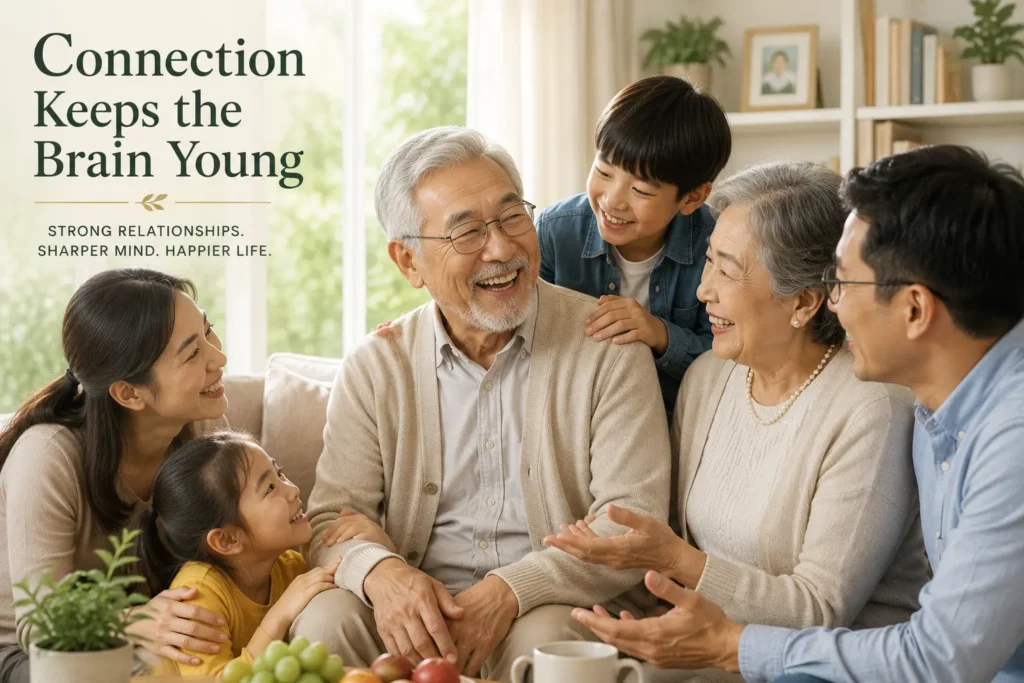
All of these activities nurture connection.
And connection nourishes the brain.
Finding Your Own Ikigai
The Japanese concept of Ikigai is often translated as “a reason for being.”
It does not have to be something grand.
It can be as simple as:
- Watering flowers each morning.
- Feeding a beloved dog.
- Looking forward to a weekly phone call.
- Planning a small trip.
- Writing a few pages in a journal.
The goal is not achievement.
The goal is having a reason to wake up tomorrow.

A Final Thought
The number on your driver’s license tells us your age.
It does not tell us the age of your spirit.
It does not tell us the age of your curiosity.
And it certainly does not determine the future of your brain.
Perhaps the most important lesson from modern neuroscience is this:
The brain remains remarkably adaptable throughout life.
From today onward, try standing on one leg for a few moments.
Smile a little more often.
Use the word “but” to redirect negative thoughts.
Find one small reason to look forward to tomorrow.
And most importantly, don’t be too quick to call yourself old.
Your brain may have other plans.
✦
This article was inspired by the work of Japanese brain researcher Nishi Takayuki and adapted for Silent Strong readers who believe that healthy aging is about more than simply adding years to life—it is about adding life to those years.