
Flatten Your Glucose Curve
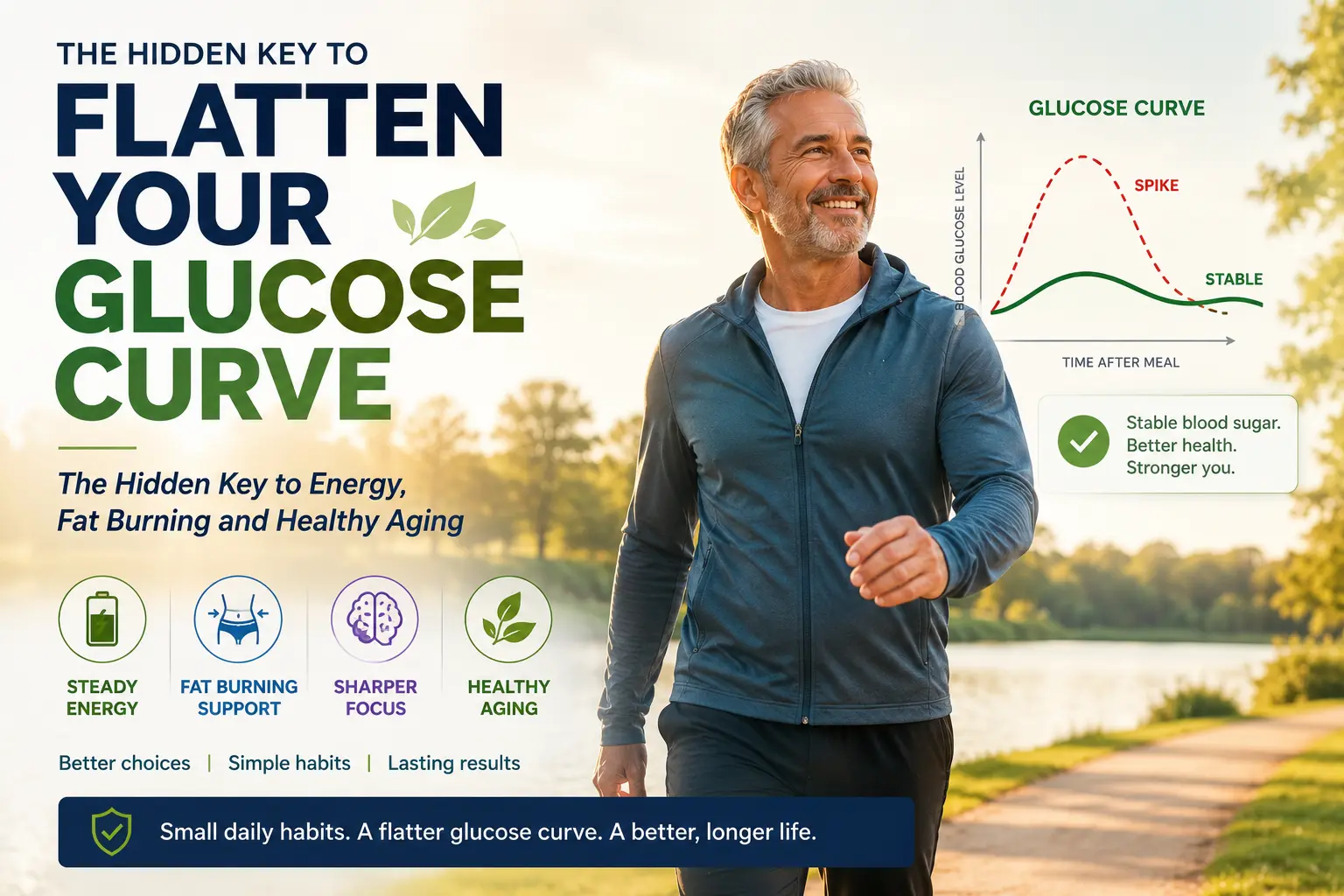
The Hidden Key to Steady Energy, Fat Burning, and Healthy Aging
Have you ever felt exhausted after lunch, found yourself craving something sweet in the afternoon, or noticed that your body doesn’t recover as quickly as it used to?
Many people assume these are simply signs of getting older.
But there may be another explanation.
It could be your glucose curve.
More and more research suggests that blood sugar regulation affects far more than diabetes. It influences our energy levels, hunger, weight, mood, skin health, and even how we age.
The encouraging news is that you don’t need a strict diet or extraordinary willpower to improve it.
Sometimes, a few small changes can make a remarkable difference.
1. The Nightmare of Glucose Spikes
Glucose is the body’s primary source of fuel. Every cell depends on it.
The problem begins when too much glucose enters the bloodstream too quickly.
This commonly happens after meals rich in refined carbohydrates, sugary foods, or processed snacks that contain very little fiber.
What Is a Glucose Spike?
A glucose spike occurs when blood sugar rises rapidly after eating.
While occasional spikes are normal, frequent and large spikes can place significant stress on the body over time.
Why Are Glucose Spikes Harmful?
Every time blood sugar surges, three things tend to happen.
1. Increased Oxidative Stress
Excess glucose can overwhelm cells and increase the production of free radicals.
Over time, this may contribute to damage in tissues, blood vessels, and DNA.
2. Faster Aging Through Glycation
Glucose can attach to proteins throughout the body in a process called glycation.
This process gradually damages collagen, blood vessels, and organs.
Many scientists believe glycation plays an important role in visible aging.
3. Increased Fat Storage
When glucose enters the bloodstream, insulin helps move it into cells.
However, when the body’s storage capacity is already full, excess glucose is converted into fat.
Much of that fat may accumulate around internal organs.
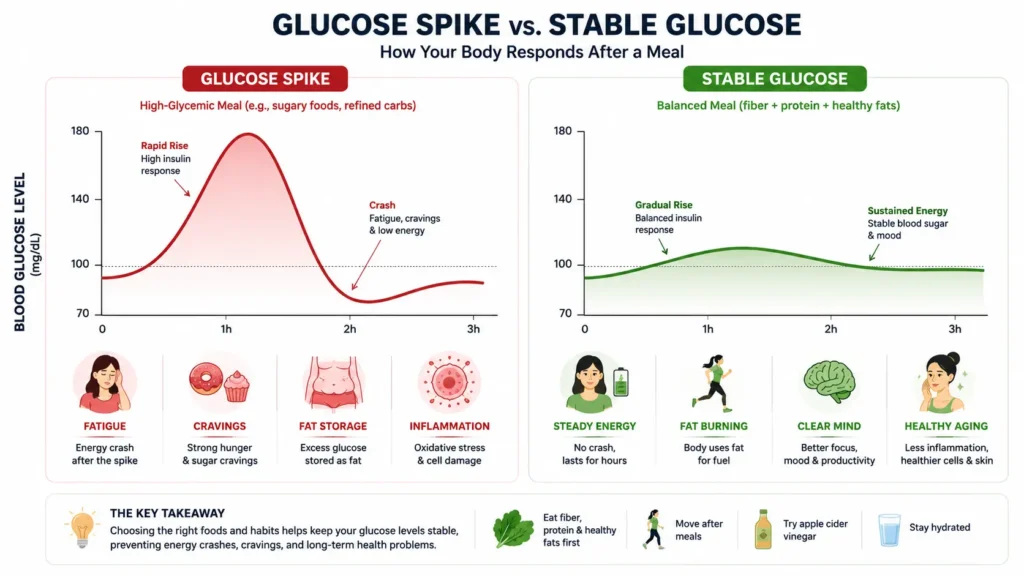
Simply put:
Frequent glucose spikes encourage fat storage.
Stable glucose levels encourage energy use.
2. Four Simple Tools to Flatten Your Glucose Curve
The goal is not perfection.
The goal is fewer spikes.
Biochemist Jesse Inchauspé, author of Glucose Revolution, has popularized several practical strategies that help many people stabilize blood sugar without giving up the foods they enjoy.
Tool #1: Change the Order of Your Food
Surprisingly, what you eat is only part of the story.
The order matters too.
A simple sequence works remarkably well:
- Vegetables and fiber first
- Protein and healthy fats second
- Starches and sweets last
Fiber acts like a natural speed bump in digestion.
It slows the absorption of glucose and often reduces post-meal cravings.
Tool #2: Choose a Savory Breakfast
Many traditional breakfasts are loaded with sugar.
Cereal, fruit juice, pastries, and sweet coffee drinks can trigger an early glucose spike that sets the tone for the entire day.
Instead, consider a breakfast centered around:
• Eggs
• Yogurt
• Vegetables
• Nuts
• Avocado
Many people notice steadier energy and fewer cravings when they start the day this way.
Tool #3: Try Apple Cider Vinegar Before Meals
This simple habit has attracted considerable scientific interest.
Mix one tablespoon of apple cider vinegar into a large glass of water and drink it about twenty minutes before a meal.
Acetic acid appears to slow starch digestion and improve glucose uptake by muscles.
For some people, this can noticeably reduce post-meal glucose spikes.
Tool #4: Move After Eating
You don’t need a gym.
You don’t need an intense workout.
A ten-minute walk is often enough.
When muscles are active, they immediately use glucose for fuel.
Instead of remaining in the bloodstream, that glucose gets put to work.
Light walking, gardening, household chores, or a few bodyweight exercises can all help.
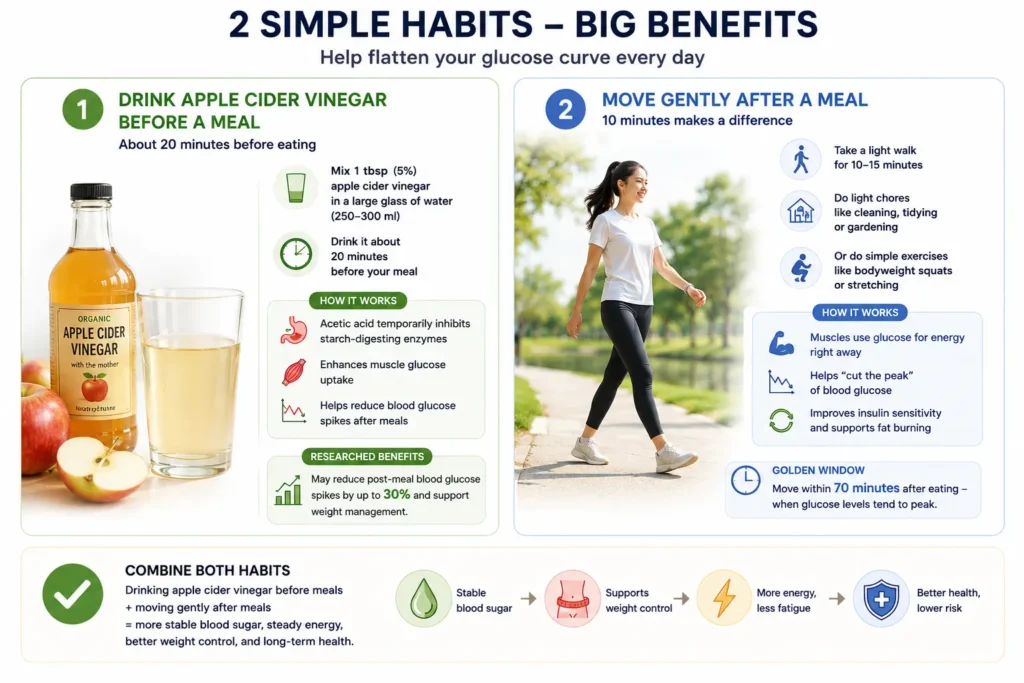
Sometimes, one of the best things you can do after dinner is simply keep moving.
3. The Truth About Sugar and Hidden Health Traps
To flatten your glucose curve, it helps to understand where sugar is hiding.
Many foods marketed as healthy can still create significant blood sugar spikes.
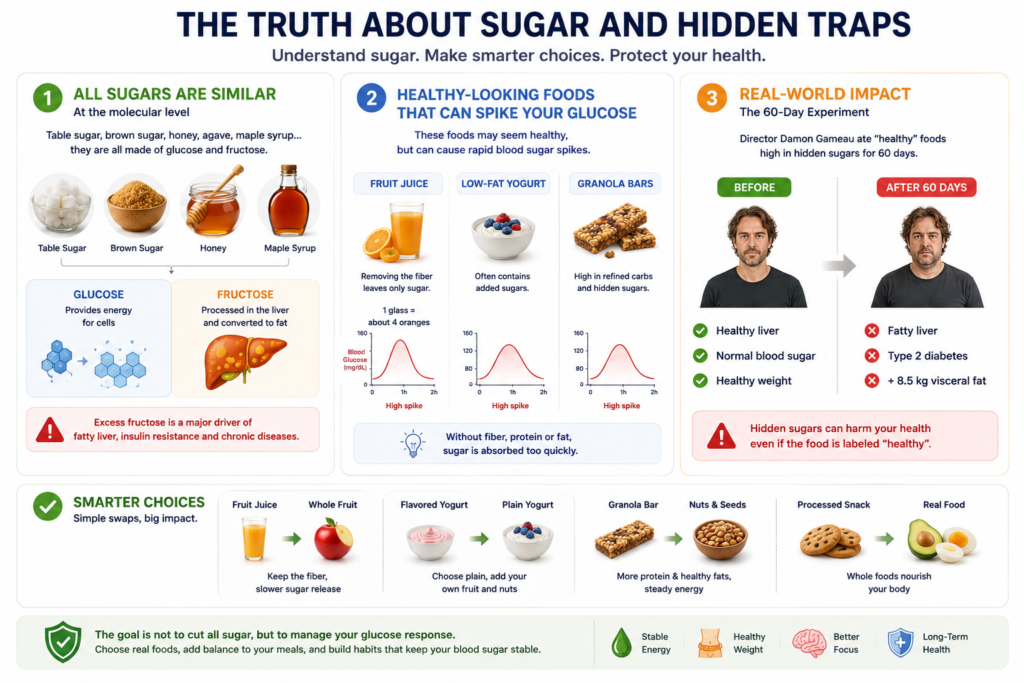
All Sugars Are Similar at the Molecular Level
White sugar, brown sugar, honey, maple syrup, and many natural sweeteners all contain combinations of glucose and fructose.
Your body ultimately processes them in similar ways.
Fructose deserves special attention because it is primarily processed in the liver.
Excessive fructose consumption has been linked to fatty liver disease and other metabolic problems.
The “Healthy Food” Trap
Many products that appear healthy may contain surprising amounts of sugar.
Fruit Juice
Whole fruit contains fiber.
Juice removes much of that fiber.
Without fiber, sugar enters the bloodstream far more quickly.
A single glass of orange juice may contain the sugar equivalent of several oranges.
Low-Fat Yogurts and Granola Bars
When manufacturers remove fat, they often add sugar to improve taste.
The label may look healthy.
The glucose response may tell a different story.
One famous experiment by Australian filmmaker Damon Gameau documented what happened when he consumed large amounts of foods marketed as healthy but rich in hidden sugars.
Within just sixty days, he developed signs of fatty liver disease, metabolic dysfunction, and significant weight gain.
4. Why Is Sugar So Hard to Resist?
Our attraction to sugar is not simply a lack of willpower.
It is deeply rooted in human evolution.
Millions of years ago, sweet foods were rare and valuable.
Humans evolved to seek them out because they provided quick energy and helped the body store fat during times of scarcity.
Today, however, we live in a world where sugar is available almost everywhere.
The same survival mechanism that once protected us now works against us.
Modern food companies understand this extremely well.
The result is a food environment that constantly encourages us to consume more sugar than our bodies were designed to handle.
A Final Thought
Managing blood sugar does not mean living a life of restriction.
You do not need to eliminate every dessert.
You do not need to fear carbohydrates.
And you certainly do not need to be perfect.
Instead, focus on small habits:
Eat fiber first.
Choose a protein-rich breakfast.
Consider vinegar before meals.
Take a short walk after eating.
These simple actions can help create a flatter glucose curve, steadier energy, fewer cravings, and healthier aging.
Every time you reduce a glucose spike, you reduce stress on your body.
And over the years, those small daily choices can add up to something extraordinary.
A little more energy.
A little more resilience.
And perhaps a healthier, longer life.